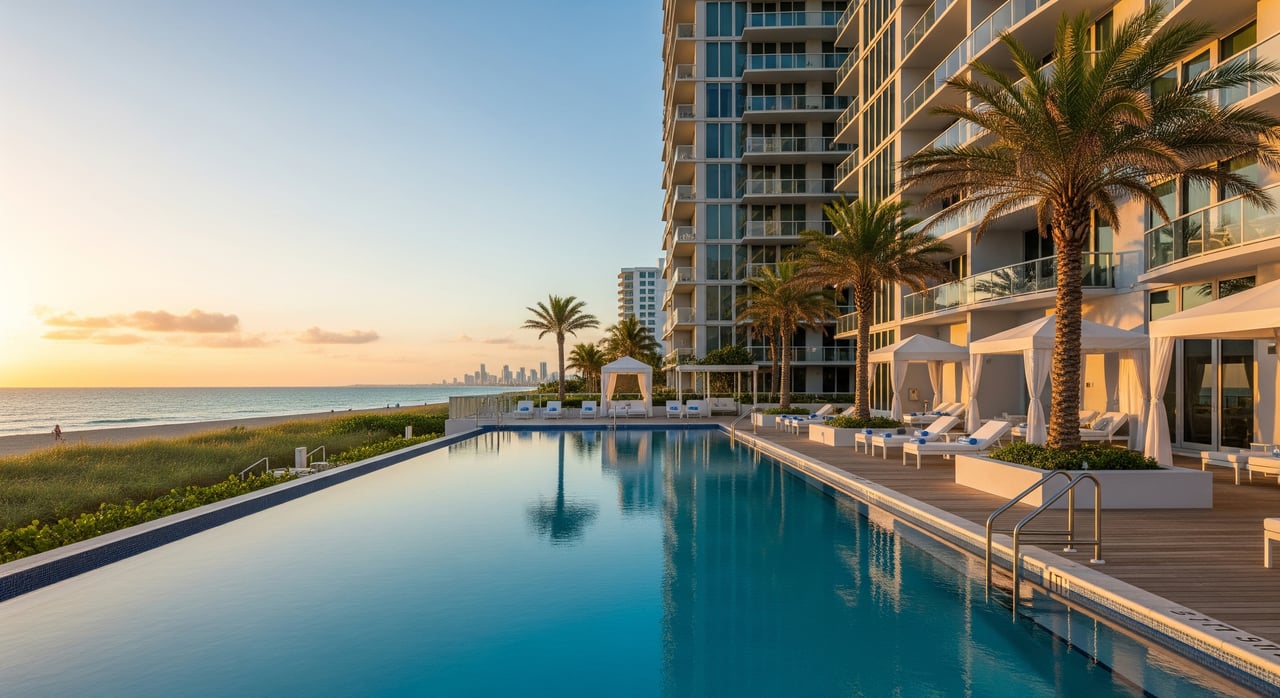
Thinking about a Sunny Isles Beach getaway you can also rent out when you are not here? You are not alone. Many buyers look at condo-hotels as a flexible way to enjoy a coastal lifestyle while offsetting costs with rental income. The rules are different from a standard condo, though, and small details can change your returns and financing options.
In this guide, you will learn what a condotel is, how rental programs typically work in Sunny Isles high-rises, what lenders look for, how HOA governance affects risk, and what to review before you make an offer. Let’s dive in.
What a condotel is
A condotel, short for condo-hotel, is a condominium building where you own a deeded unit and can place it into a hotel-style rental program. The building usually provides front desk services, housekeeping, a reservations platform, food and beverage options, and concierge support.
Unlike a timeshare, you own the entire unit. You can use it yourself or rent it out. When enrolled in a rental program, your unit is marketed like a hotel room. Revenue is shared according to a contract that outlines fees and splits.
The big difference from a standard condo is the short-term lodging operation. A typical residential condo is designed for long-term living. A condotel is set up for transient guests, with daily or short stays, centralized reservations, and on-site hotel services.
How Sunny Isles condotels operate
Sunny Isles Beach is a luxury resort and condo market with many high-rise buildings that offer hotel-style amenities. Some operate as true condo-hotels while others allow short-term rentals under specific rules. Each building sets its own model, so do not assume every tower works the same way.
Ownership and use options
Many owners enjoy personal use during parts of the year. Rental programs often allow owner stays, but may have blackout dates and notice requirements. Some projects let you opt in or out of a hotel program, while others require participation.
Rules for owner direct rentals vary. A few buildings permit you to rent on your own, while others prohibit it or apply extra fees. Always confirm the association rules and any operator agreement before you buy.
Rental program mechanics
Rental income can be handled in two main ways. Some programs use a pooled revenue system that combines room revenue and then allocates shares by formula. Others track income unit by unit. A pooled approach can smooth your income but makes it harder to see individual unit performance.
Most programs deduct operating costs, management and marketing fees, and overhead before splitting the net income with owners. Contracts define the percentages and fee structure, which can vary widely. Minimum stay rules and how your unit is marketed also influence occupancy and revenue.
Short-term guarantees by operators are uncommon. If offered, they usually come with restrictions, limited duration, and conditions you must meet. Treat any guarantees as a bonus, not a baseline.
Practical operations to confirm
Most condotel units are sold furnished and ready for hotel use. Verify the inventory list and what is considered operator property. Ask about housekeeping charges during your personal stays, as owners often pay for services consumed.
A branded reservation system can boost bookings, but it also adds fee layers and gives the operator more control. Understand how the program prices your unit, where it is advertised, and how revenue and expenses are reported to you.
Financing and mortgage basics
Financing a condotel is different from financing a standard condo. Lenders view transient lodging as higher risk because income depends on occupancy and operator performance. That affects loan availability, down payments, rates, and documentation.
Warrantability and loan options
Many conforming loans require the building to be considered warrantable under Fannie Mae or Freddie Mac rules. Features common in condotels, like short-term rentals, pooled income, significant commercial space, or high operator control, can make a project non-warrantable. That limits access to standard conforming financing.
FHA and VA loans have stricter condo approval criteria and often do not approve condo-hotel properties or projects that function like transient lodging. Plan for limited availability of these programs on condotel units.
For down payments, some conventional lenders will finance owner-occupants in condotels, but they often require at least 20 percent down. Investment loans usually require 25 to 35 percent or more, and rates can be higher than standard condo loans. If conforming options are not available, portfolio or private lenders may be an alternative, usually at higher cost and with different qualification rules.
Underwriting and income treatment
Some lenders consider rental income, especially if there is a proven history shown in operator reports. Others may require evidence of sustained owner occupancy or prior performance data before counting that income to qualify you. Lenders also review association budgets, reserves, minutes, and any litigation, as well as operator occupancy and financials.
Ask early whether your lender will treat the unit as owner-occupied, a second home, or an investment property. The classification drives your down payment, rate, and documentation.
Taxes and transient rentals
Short-term rental income is taxable and must be reported. Owners may be able to deduct allowed expenses such as management fees, depreciation, mortgage interest, and a portion of HOA dues related to rental use. Because tax rules and allocations can be complex, consult a tax professional with Florida short-term rental experience.
Short stays often trigger state and local transient rental taxes. If you rent through a hotel operator, those taxes are usually collected and remitted by the operator, but confirm who is responsible and whether you must register with local or state agencies. For property taxes, condotel units are assessed like other residential condos. Out-of-state owners typically do not qualify for Florida homestead exemptions.
HOA and governance considerations
Florida condominiums are governed by the Florida Condominium Act, Chapter 718. The law covers budgets, reserves, disclosures, voting, and other requirements. You should review the association documents and required disclosures during your contract period to understand costs, rules, and timelines.
Reserve funds and assessments
Review the association’s budget, reserve study, and financial statements. Florida law requires associations to address reserves for capital items and deferred maintenance, but communities can vote to reduce or waive reserves. Low reserves increase the chance of special assessments later, especially in buildings with heavy seasonal use.
Look at current monthly assessments and what they cover. Confirm whether dues include staff, security, utilities, insurance, and reserves. Ask about recent assessment history and any pending projects that could impact future costs.
Insurance and hurricane risk
The association carries a master policy that covers the building. Check the wind and hurricane deductibles and whether those deductibles can be assessed to owners. Confirm whether your walls-in policy must cover certain items and verify overall policy limits. Insurance availability and premiums are material factors in coastal Miami-Dade, so review recent renewal trends.
Operator contracts and owner rights
Hotel management or branding agreements can give the operator strong control over maintenance standards, marketing, and rental rules. These contracts are often long term and can be difficult to change. Some projects require owners to participate in the rental program or to keep specific furniture packages and maintenance standards.
Confirm board control and voting rights. Developer control, large block ownership, or operator influence can affect how decisions are made and how fees are set.
Local rules and use limits
Short-term rental rules are subject to city and county regulations. Buildings also layer their own restrictions. Confirm any registration, licensing, or zoning requirements for Sunny Isles Beach, along with building-specific rules on minimum stays, guest policies, parking, and amenity access.
Litigation risk
Condo associations sometimes face lawsuits, including construction defect, insurance coverage, or governance disputes. Pending litigation can complicate lending and lead to future assessments. Review board minutes and any legal disclosures to gauge risk.
Your due diligence checklist
Before you write an offer, gather and review these items:
- Association budget for the current and prior year, reserve study, and financial statements if available.
- Minutes from the last 12 months of board and special meetings.
- Declaration, bylaws, rules, FAQs, and any recorded covenants.
- Rental program contract and any hotel operator or management agreement.
- Master insurance declarations and deductible details.
- Litigation disclosures and any attorney letters to the association.
- Unit-level rental history or operator profit and loss statements for the past 1 to 3 years.
- Building-level occupancy and revenue reporting if available.
- Inventory list of furniture and equipment that will convey.
- History of special assessments and any pending or planned projects.
- Any developer or brand agreements if the developer or brand still controls elements of the building.
Smart questions for your consultation
Bring these targeted questions to your agent, the association, the operator, and your lender. Clear answers can save you time and reduce surprises.
For the listing agent or seller
- Is the unit enrolled in the rental program now, and can you provide the contract and recent unit P&L?
- What owner-use rules, blackout dates, or minimum stays apply?
- Which furnishings and equipment are included, and what belongs to the operator?
For the association or building manager
- Is the project considered warrantable for conforming loans? Has it ever received FHA or VA approval?
- What are the master policy deductibles for wind and hurricane, and how are deductibles handled if a loss occurs?
- Are there pending assessments, planned capital projects, or active litigation?
- Who is the hotel operator, and what is the length and termination language of the management or branding agreement?
- How are rental revenues accounted for, pooled or unit level, and what fees are deducted before owner distributions?
For your prospective lender
- Will you classify the purchase as owner-occupied, second home, or investment, and what down payment and rate apply?
- Is this building eligible for the loan program I want to use? If not, what alternatives are available?
- Will you consider operator rental income to qualify me, and what documentation do you require?
For your tax advisor or attorney
- How should I report short-term rental income, and what registrations or transient taxes apply in this area?
- What are the property tax implications for an out-of-state owner, and how do homestead rules apply?
Red flags to watch for
- Chronically low reserves or repeated reserve waivers.
- Large or frequent special assessments in recent years.
- Long and restrictive operator contracts with high fees and limited transparency.
- Non-warrantable project status that constrains financing options.
- High wind or hurricane deductibles that could lead to significant owner assessments after a storm.
- Active or recurring litigation, especially construction defects or insurance disputes.
- Limited or unclear financial reporting from the operator or association.
Is a condotel right for you?
A condotel in Sunny Isles Beach can be a great fit if you want resort-style amenities, personal use flexibility, and a built-in rental platform. It can also be complex. Your returns depend on the operator program, fees, building reserves and insurance, and the loan you qualify for. Success comes from careful document review and a clear plan for how you will use the property.
If you value a turnkey experience with on-site services, and you are comfortable with the financing and HOA dynamics, a Sunny Isles condotel can blend lifestyle and income potential. If you prefer greater control over rentals or ultra-predictable fees, a standard condo or a different short-term rental model may fit better.
You do not have to navigate this alone. For a boutique, multilingual advisory backed by Compass tools and remote-closing expertise, reach out to Donna Zalter to Schedule Your Personalized Consultation. We will help you evaluate buildings, review documents, and model scenarios so you can move forward with confidence.
FAQs
What is a condotel in Sunny Isles Beach?
- A condotel is a condo you own outright that offers hotel-style services and an optional rental program that markets your unit like a hotel room.
How do rental programs pay owners in condotels?
- Programs either pool revenue or track it by unit, then deduct operating and management fees and distribute the net income per the contract.
Can I finance a condotel with a standard mortgage?
- Sometimes, but many condotels are considered non-warrantable, which limits conforming loans and can require higher down payments or portfolio loans.
Are FHA or VA loans available for condotels?
- Availability is limited because these programs have stricter condo approval requirements and often do not approve condo-hotel properties.
What HOA costs should I review before buying?
- Review monthly assessments, what they cover, reserve levels, insurance deductibles, recent assessment history, and any pending capital projects.
Who handles taxes on short-term rental income?
- You must report your rental income for federal and state taxes. Operators often collect and remit transient taxes, but you should confirm your responsibilities.
What documents should I request during due diligence?
- Ask for the association budget, reserve study, minutes, insurance policies, rental program contract, operator P&L, litigation disclosures, and furniture inventory.