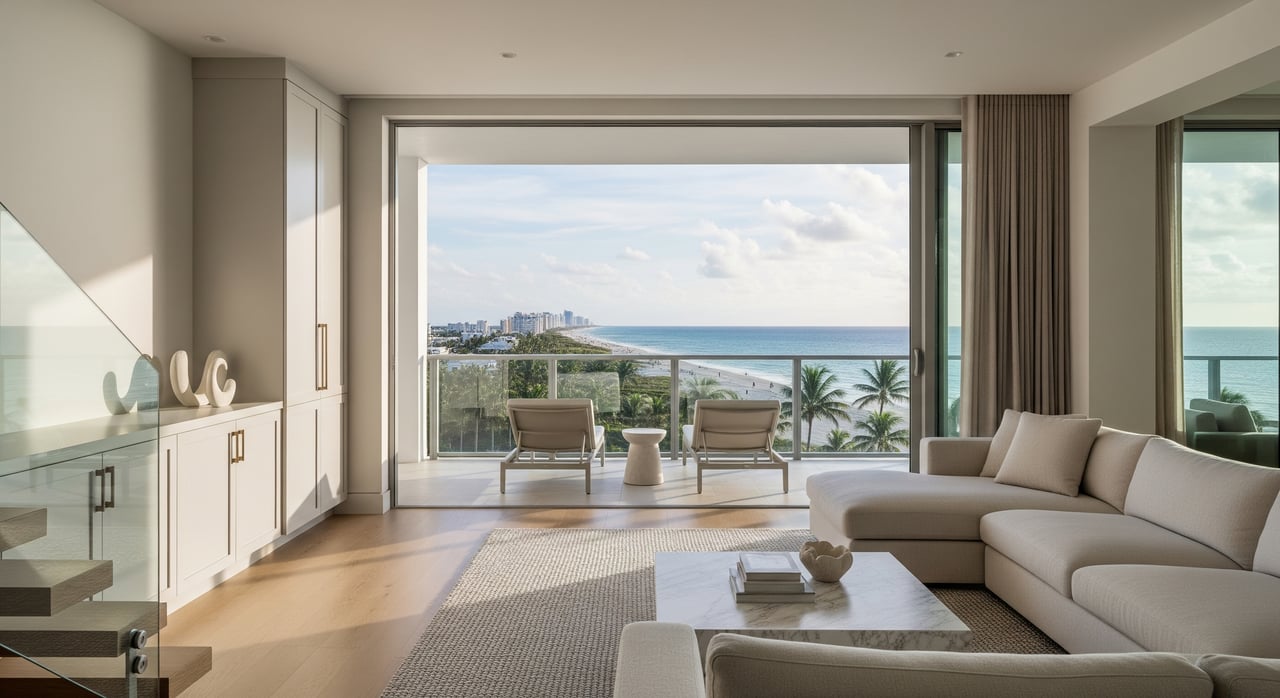
Wondering what your Hallandale Beach oceanfront condo is really worth? Pricing in this market is part science and part strategy, and small details can move the number by tens of thousands. You want a clear plan that respects your timeline, speaks to the right buyers, and sets you up to sell with confidence. This guide gives you a step-by-step framework tailored to Hallandale Beach so you can price precisely and launch strong. Let’s dive in.
Know your Hallandale Beach market
Hallandale Beach sits in coastal Broward County and draws a mix of primary residents, seasonal buyers, second-home owners, investors, and international clients. Proximity to Aventura, Gulfstream Park, and I‑95 brings steady interest and varied buyer goals. You need to price with these segments in mind.
Seasonality matters. Interest typically rises from late fall through spring as seasonal buyers return. If you plan to list in winter, you may lean a bit more assertive with price, provided your building has limited competition and strong recent sales.
Local factors drive value. Waterfront location and view quality are primary. A direct oceanfront line often commands a meaningful premium over side or partial views. Flood and wind insurance costs, HOA rules and rental restrictions, building condition and assessments, and amenity quality all influence demand and price. Verify these items early to avoid surprises.
Gather the right data
Build your pricing file before you pick a number. Focus on these items:
- Unit facts: square footage per county records, bedrooms and baths, deeded parking and storage, line or stack number, floor, orientation and view, renovation scope and date, impact windows or shutters, and rental allowance.
- Building facts: year built, number of units, amenities, recent capital projects, special assessments, monthly HOA dues and what they include, owner occupancy versus rental mix.
- Recent sales and actives: start with same-building sales within the last 6 to 12 months, then same block or complex, then nearby oceanfront buildings with similar age and amenities.
- Market metrics: days on market, list-to-sale price ratio, months of inventory, absorption rate, and price per square foot trends for oceanfront lines.
- External costs: estimated property taxes, HOA dues, flood insurance, windstorm policy costs, and any special assessments.
Choose the right comps
Start in your building
Your best comps are in the same building, ideally the same line and a similar floor. These paired sales help you separate view, floor, and renovation premiums without guesswork. If you can find two units where only one factor differs, you can quantify that difference with confidence.
When to look next door
If same-building pairs are thin, expand to adjacent oceanfront buildings with similar age, construction, and amenities. Normalize values by price per square foot and apply adjustments for view, line, floor, renovation, parking, and dues.
Avoid weak comps
Skip distant non-oceanfront comps. They rarely reflect the premiums that oceanfront buyers are willing to pay. Be cautious with units that have heavy assessments or very different renovation levels unless you can quantify an adjustment.
Quantify adjustments, not guesses
Use a simple, repeatable approach to translate differences into dollars.
- Convert each comp’s sale price into price per square foot for apples-to-apples.
- Use paired sales to estimate feature premiums. For example, compare similar units where the only change is view line or floor level.
- Apply percentage or dollar adjustments to each comp’s price per square foot to reflect differences in view, line, and renovation.
- Document your assumptions so you can explain the logic to buyers and agents.
Common items to adjust:
- View and location: direct oceanfront versus side or partial view.
- Line or stack: corner lines often have different exposure and premiums.
- Floor level: higher floors can add value for view, privacy, and noise reduction.
- Renovation level: full, recent renovations typically carry a measurable premium over original or dated finishes.
- Usable square footage: adjust using price per square foot.
- Parking and storage: deeded spaces and storage can matter to seasonal owners and investors.
- HOA dues and assessments: higher dues or assessments can suppress price.
Helpful formulas:
- Price per square foot = Sale price divided by living area.
- Paired-sale premium in percent = (Price with feature minus price without feature) divided by price without feature, then multiplied by 100.
Set your list price with strategy
Build a value band
After adjustments, create a range: conservative low, market median, and optimistic high. This band gives you room to align with your timing and risk tolerance. If you need a faster sale, lean toward the conservative end. If inventory is thin and your unit is exceptional, you can position closer to the high end.
Price psychology and search bands
Consider how buyers search. MLS and portal filters often use round numbers. Placing your price at a key band can expand your audience. For example, $600,000 will appear in more searches than $599,900 when filters use minimum and maximum ranges.
Align with your timeline and costs
Know your carrying costs and keep them visible when you choose your exact list number. Factor in expected commissions, closing costs, anticipated credits or repairs, and assessments. If you are comfortable with a longer timeline and the market is balanced, a market-price approach can maximize net while maintaining traction.
Read the market signals
Your pricing should reflect current conditions, not just past sales.
- Days on market: short days on market suggests stronger demand. Rising days on market signals softness and a need to recalibrate.
- List-to-sale price ratio: this shows the typical negotiation gap and helps you set a realistic buffer.
- Months of inventory and absorption: months of supply equals active listings divided by average monthly sales. Under roughly four months often acts like a seller’s market. Over roughly six months often favors buyers. Track new listings and pending sales each week.
What short days on market means
If similar condos are selling quickly and at or above asking, you can list right at your calibrated market number or slightly below to spark multiple offers. Make sure the unit is fully prepared and marketed to support that strategy.
When days on market lengthen
If properties sit without offers, consider staged reductions rather than one big cut. Pair each reduction with a marketing refresh and a clear explanation of how the updated comps support the new price.
Segment your buyers
Different buyers focus on different details. Primary buyers care about financing availability and fees. Seasonal and second-home buyers prioritize turnkey condition, easy maintenance, and amenities. Investors look hard at rental rules, income potential, and occupancy rates. Tailor your messaging to each segment without changing your underlying price logic.
Launch for early qualified buyers
Preparation is the difference between testing the market and capturing it.
Pre-launch checklist:
- Disclosures and documents: gather HOA rules, lease restrictions, insurance certificates, recent meeting minutes, and budget or reserve studies.
- Building status: confirm inspections, any pending assessments, and permit history.
- Condition: consider a pre-listing inspection for major items that could derail financing or negotiations.
- Marketing assets: order professional photos, a detailed floor plan, and a video or virtual tour. Highlight terrace shots with the best ocean view and light.
Pick a pricing approach
- Market price: list at the median of your adjusted comp range. This works well in balanced conditions and supports a predictable sale.
- Aggressive or under-market: price slightly below perceived value to drive high early traffic and potential bidding. Best in low inventory with strong demand.
- Aspirational or premium: list toward the high end if your unit is unique or newly renovated and you have time. Expect longer days on market and invest in robust marketing.
Attract early buyers
Use broker previews, target agents who specialize in oceanfront sales, and time your open house for peak availability. High-quality visuals, especially terrace and drone views that show the line and beach proximity, help buyers understand the value fast. Your listing headline should feature direct oceanfront, floor and line, renovation level, deeded parking or storage, and rental rules if favorable.
Qualify and compare offers
Ask for lender pre-approvals for financed buyers or proof of funds for cash buyers. If conditions justify it, set a clear offer review window so you can compare terms side by side. Evaluate net proceeds, financing risk, inspection timelines, and closing date. Escalation clauses can help, but make sure the appraisal and financing story supports the final number.
Have a plan if it stalls
Create trigger points before launch so you can act, not react. For example, if you have minimal showings after 14 days, refresh photos or positioning. If you have many showings but no offers after 21 days, consider a price adjustment. At 30 days, reassess comps and market signals and communicate your updated value story to buyers and agents.
Tools and quick formulas
Use these quick tools to keep your process objective and simple:
- Price per square foot = sale price divided by living area.
- Paired-sale premium in percent = (sale price with feature minus sale price without feature) divided by sale price without feature, then multiplied by 100.
- Months of inventory = active listings divided by average monthly closed sales.
- Absorption rate = closed sales in period divided by active listings.
- Estimated net proceeds = list price minus expected commissions, outstanding mortgage, closing costs, anticipated concessions, and seller repairs or credits.
Checklist items for your pricing file:
- Unit snapshot: floor, line, square feet, bedrooms and baths, deeded parking or storage, renovation summary.
- HOA snapshot: monthly dues, special assessments, rental rules, reserves.
- Comp table: address, date, sale price, price per square foot, adjustments and reasons, adjusted value.
- Market snapshot: median days on market, months of inventory for oceanfront, recent price trend direction.
- Risk items: flood zone, assessments, building recertification status, insurance considerations.
Authoritative places to verify details include the Broward County Property Appraiser for parcel and square footage data, the local MLS for comps and days on market, City of Hallandale Beach codes and permitting for rules, FEMA flood maps for flood zones, your condo HOA or management for budgets and assessments, and Florida Realtors market reports for broader context.
Why sell with the Horizon Team at Compass
You deserve a pricing plan that is precise and a launch that reaches the right buyers from day one. With a boutique, relationship-first approach backed by Compass resources, you get high-touch advisory and premium exposure. The Horizon Team provides turnkey logistics for absentee and second-home owners, including staging support through Compass Concierge, property preparation, and remote closing coordination.
You also benefit from multilingual service for international and out-of-state buyers, plus targeted outreach to agents who actively sell oceanfront condos in Broward and nearby markets. That combination helps you convert attention into strong, qualified offers while keeping the process clear and stress-free.
Ready to price with confidence and sell on your timeline? Schedule your personalized consultation with Donna Zalter, PA MBA.
FAQs
How do I quantify the value of a direct ocean view in Hallandale Beach?
- Use paired sales in your building. Compare similar units where the primary difference is view line, then calculate the percentage premium using price per square foot.
Should I factor flood and wind insurance costs into my price?
- Yes. Higher carrying costs can reduce buyer affordability. Present estimated premiums and adjust your pricing strategy to reflect the effect on financed buyers.
Do higher HOA dues and assessments lower my condo’s market value?
- They can. Compare your dues and any assessments to similar buildings and apply an adjustment if buyers face materially higher monthly costs.
When is it smart to price slightly below market to spark bidding?
- Consider this when months of inventory is low, days on market are short, and you have the marketing assets ready to capture early demand. Avoid it if the buyer pool is small or conditions are soft.
How does seasonality in South Florida affect my list price?
- Interest typically rises from late fall through spring. If you launch during peak season and competition is limited, you may price at or near the top of your calibrated range.
What if my building has a pending assessment or recertification work?
- Verify details with the HOA. Pending work can affect financing and price, so disclose early and account for the impact when you select comps and set your list number.