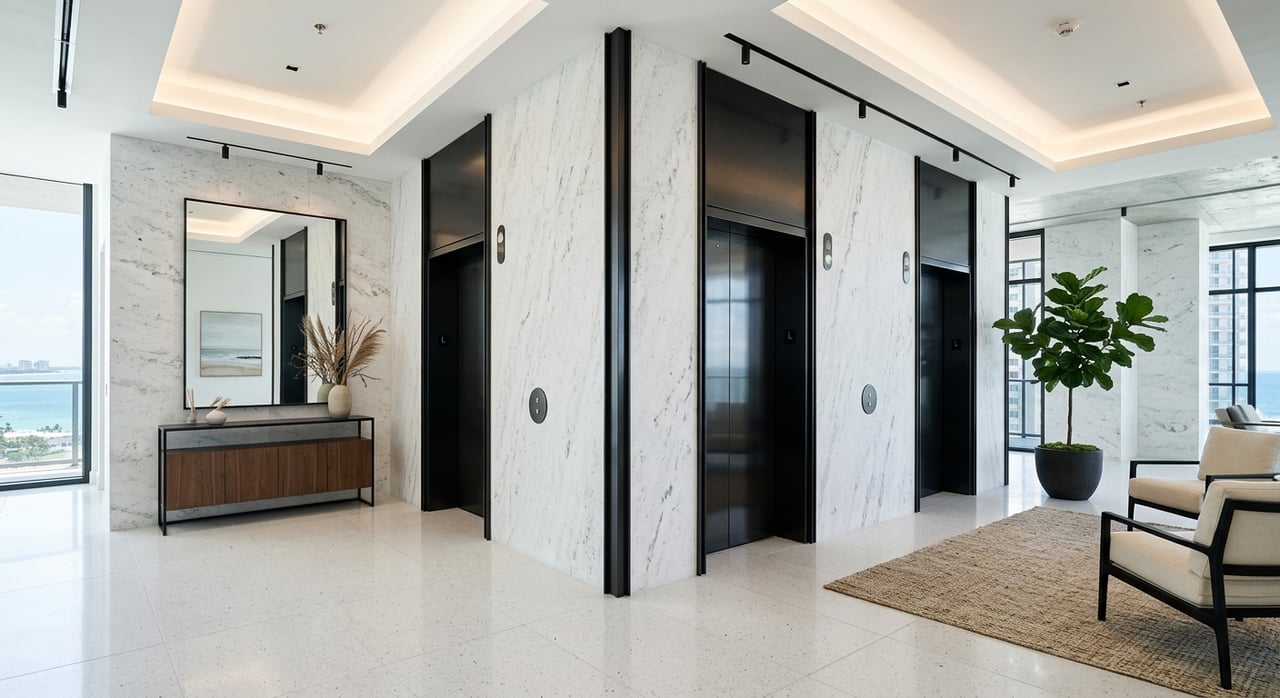
If you are looking at Aventura condos as an investment, it is easy to get pulled in by water views, polished lobbies, and resort-style amenities. But in this market, the smartest first move is not choosing the prettiest unit. It is making sure the building itself supports your rental goals, holding costs, and long-term exit plan. Let’s dive in.
Why Aventura draws investors
Aventura has a distinct condo-centered identity. The city spans about 3.2 square miles along the Intracoastal Waterway in northeast Miami-Dade, with access to both Miami and Fort Lauderdale, nearby airports and seaports, and a strong lifestyle mix that includes parks, recreation, transit, restaurants, movie theaters, and Aventura Mall.
That matters because condo demand here is often shaped by convenience, amenities, and building quality, not just unit size. If you are buying for rental income or future resale, you need to think beyond square footage and focus on how well a building fits the way people actually want to live in Aventura.
Start with the building, not the unit
In Aventura, one building can be investor-friendly while the one next door can create major friction. Leasing rules, reserve funding, inspection history, and association financial health can all vary from property to property.
That is especially important in a market where Miami-Dade condo inventory reached 13.0 months in the first quarter of 2026, well above the 5.5-month balanced benchmark. When buyers have options, you can afford to be selective and prioritize strong fundamentals over impulse.
Review condo documents first
Your first evaluation step should be the condominium documents. Under Florida law, resale buyers are entitled to key association materials, including the declaration, articles, bylaws, rules, year-end financial information, FAQ document, any required milestone inspection summary, and the most recent structural integrity reserve study.
These documents tell you how the building actually operates. They can reveal whether leasing is restricted, whether reserves look adequate, and whether major structural or financial issues may affect your costs after closing.
What to request right away
Ask for these items early in your diligence process:
- Declaration of condominium
- Articles and bylaws
- Current rules and regulations
- Latest budget and year-end financials
- Most recent structural integrity reserve study
- Milestone inspection summary, if applicable
- Any turnover inspection report if available
For contracts entered after December 31, 2024, Florida law also requires disclosure if a required milestone inspection or structural integrity reserve study has not been completed. If that required disclosure is missing, the buyer may have the right to void the contract before closing.
Verify lease rules in writing
Investors sometimes assume an Aventura condo can be rented because the area has a visible rental market. But lease policies are building-specific, not citywide.
Florida law allows associations to charge a fee for a sale, mortgage, lease, sublease, or other transfer only if the governing documents authorize it, and that fee cannot exceed $150 per applicant. If the documents allow it, the association may also require a prospective tenant to place a security deposit of up to one month’s rent in escrow.
Lease questions to answer before you offer
Do not rely on verbal summaries. Confirm these points in writing:
- Minimum lease term
- Rental cap, if any
- Waiting period before leasing
- Board approval process and timeline
- Move-in and move-out rules
- Transfer application fees
- Security deposit requirements
- Subleasing restrictions
A building with attractive pricing can quickly become less attractive if rental approvals are slow, lease terms are too restrictive, or tenant placement is harder than expected.
Check structural health and recertification status
In Florida, structural diligence is not optional. It is one of the first things an investor should evaluate, especially in coastal condo markets.
State law requires milestone inspections for buildings that are three habitable stories or more, generally by the year the building turns 30. In salt-water-adjacent areas, local enforcement can require an earlier trigger at 25 years. Miami-Dade also states that recertification is required at 30 years for inland buildings and 25 years for coastal buildings, with repeat reviews every 10 years.
Because Aventura is on the Intracoastal and near the coast, you should confirm how a specific building is classified and whether any milestone or recertification work is pending. A lower purchase price does not help much if large building-wide repairs are around the corner.
Why reserve studies matter to investors
Florida’s structural integrity reserve study rules can directly affect cash flow. Existing unit-owner-controlled associations already in place on or before July 1, 2022 must complete a structural integrity reserve study by December 31, 2025 for each building that is three stories or higher, with limited timing coordination if a milestone inspection is also due.
That study must identify inspected items, estimate remaining useful life and replacement cost, and provide a reserve funding plan. For you, that means future costs may show up not only in monthly dues, but also in reserve increases, special assessments, loans, or lines of credit used by the association.
Study the association’s finances
A beautiful building can still be a weak investment if the finances are strained. Review the association’s budget, year-end financials, reserves, and any signs that major work is underfunded.
Florida also tiers association financial reporting based on annual revenue. Associations with annual revenues of $500,000 or more must prepare audited financial statements. Those with revenues from $300,000 to $499,999 prepare reviewed statements, those from $150,000 to $299,999 prepare compiled statements, and those below $150,000 prepare a report of cash receipts and expenditures.
Financial red flags to watch
As you review the numbers, pay close attention to:
- Low reserves relative to building age and condition
- Recent or planned special assessments
- Borrowing for repairs or deferred maintenance
- Rising operating costs without a clear plan
- Missing records or incomplete disclosures
If records feel hard to obtain or inconsistent, that is a signal to slow down and investigate further.
Underwrite the real carrying costs
Too many investors focus on purchase price and estimated rent, then underestimate the monthly and annual cost structure. In Aventura condos, true underwriting needs to include taxes, HOA dues, insurance, reserve exposure, and possible special assessments.
Miami-Dade property taxes are set through multiple taxing authorities, and the key issue for many investors is not just the millage rate but the tax classification. Florida law states that renting all or substantially all of a dwelling previously claimed as homestead means the homestead is considered abandoned until the owner physically occupies it again. In practice, investor-owned rental condos generally should not be underwritten with homestead savings.
Insurance deserves a closer look
Florida guidance says condo unit owners need an HO-6 policy, which generally covers the unit interior, personal property, and liability. HO-6 coverage generally does not include flood, and Florida requires at least $2,000 of loss-assessment coverage with a deductible of no more than $250.
That last piece matters because associations may assess unit owners for damage to common areas that the master policy does not cover or for costs not backed by reserves. Investors should review both unit-level insurance needs and the building’s master policy structure.
Match the building to likely renters
Aventura has a meaningful rental base. Census data reported 6,290 renter-occupied units and 11,479 owner-occupied units in 2020, which supports the case for long-term leasing in the right building.
The city’s demographic profile also gives clues about renter demand. Census QuickFacts shows 54.2% of residents are foreign-born, 68.4% speak a language other than English at home, median gross rent is $2,513, average household size is 2.26 persons, and 25.8% of residents are age 65 or older. Combined with the city’s retail and medical economic drivers and a mean commute time of 31.6 minutes, that suggests potential demand from multilingual households, smaller households, seasonal users, downsizers, and professionals tied to nearby employment centers.
Amenities can influence rentability
In Aventura, amenities are part of the investment case. The city emphasizes lifestyle, mobility, and recreation, including an express shuttle, bike share, Freebee service, parks, a waterfront recreation center, and an arts and cultural center.
That means building-level details can affect leasing performance more than some investors expect. Features like parking convenience, security, package handling, fitness or recreation spaces, and overall common-area quality may help support rentability in a competitive condo market.
Age alone is not the deciding factor
Some investors automatically rule out older condos. That can be a mistake if the building is well-managed, properly funded, and priced with current conditions in mind.
MIAMI REALTORS reported that in June 2025, Miami-Dade older condos that were 30 years or more in age sold in 62 days, compared with 79 days for newer units. That does not mean older is always better, but it does show that age alone is not enough to make or break an investment decision.
Keep your strategy realistic
Aventura also has some appeal within South Florida’s vacation-home ecosystem. MIAMI REALTORS ranked it #13 among South Florida vacation home markets in 2025, and the same report noted that 75% of sales in those vacation-home markets were all-cash.
For investors, that suggests some condos may attract seasonal users, second-home buyers, and cash-heavy purchasers. It also means your resale strategy may depend heavily on the building’s rules, upkeep, and financial predictability rather than broad assumptions about the area.
A practical first-pass checklist
Before you get attached to a unit, use a simple screening process:
- Request the condo documents and latest financials.
- Verify lease rules, fees, approval timelines, and rental caps in writing.
- Confirm milestone inspection, reserve study, and recertification status.
- Review taxes without assuming homestead treatment.
- Study insurance needs, including HO-6, flood exposure, and loss-assessment risk.
- Underwrite HOA dues plus potential reserve increases or special assessments.
- Compare the building’s amenities and operations to likely renter expectations.
That process can help you avoid properties that look strong on the surface but create headaches later.
If you want a more strategic view of which Aventura buildings align with your goals as an investor, Donna Zalter, PA MBA offers a polished, hands-on advisory approach with local condo expertise, multilingual service, and end-to-end support for buyers, second-home owners, and absentee investors.
FAQs
What should condo investors review first in Aventura?
- Start with the building documents, lease rules, financial statements, reserve study, and any milestone inspection or recertification status before focusing on finishes or views.
Are Aventura condo rental rules the same in every building?
- No. Leasing rules are building-specific, so you need to verify minimum lease terms, rental caps, approval requirements, fees, and deposit rules in that condo’s governing documents.
Do older Aventura condos automatically make bad investments?
- No. Older condos can still perform well if pricing, maintenance, reserves, and association governance are sound.
Why do reserve studies matter for Aventura condo investors?
- Reserve studies can reveal likely future costs for repairs and replacements, which may affect monthly dues, special assessments, or other building-related expenses.
Should an investor assume homestead tax savings on an Aventura condo?
- No. Investor-owned rental condos generally should not be underwritten with homestead savings because renting the property typically means homestead treatment does not apply.
What insurance should an Aventura condo investor evaluate?
- You should review HO-6 coverage, possible flood coverage needs, loss-assessment exposure, and how the association’s master policy affects your unit-level risk and costs.